Plant Cell Cycle Of / Cell Cycle Arrest In Plants / The first is interphase, during which the cell lives and grows larger.
byDillon Blye-0
Plant Cell Cycle Of / Cell Cycle Arrest In Plants / The first is interphase, during which the cell lives and grows larger.. In the case of plants, with a. These events include the duplication of its dna (dna replication) and some of its organelles. The cell cycle is the sequence of events occurring in an ordered fashion which results in cell growth and cell division. The division in plant cells occurs by forming a cell plate structure in the middle of the cell. The cell division cycle is normally divided into phases with a defined temporal order.
The cell cycle is an ordered series of events involving cell growth and cell division that produces two new daughter cells. The cell cycle is composed of interphase (g₁, s, and g₂ phases), followed by the mitotic phase (mitosis and cytokinesis), and g₀ phase. Ten years after the initial discovery that the cell cycle in plants is contro lled by key components which are also operatio nal in yeast and animals, cell cycle. The interphase is the growth of the cell. Basic unit of plant structure and function robert hooke looked at cork tissue under microscope little boxes or cells distinct from one another ….that perfectly enclosed air nehemiah grew slideshow 5488440 by chessa.
Model Plant Cell Division Meiosis Plant Cell Meiosis Cell Division from i.pinimg.com During interphase, the golgi apparatus accumulates enzymes, structural not all cells adhere to the classic cell cycle pattern in which a newly formed daughter cell immediately enters the preparatory phases of interphase, closely. Basic unit of plant structure and function robert hooke looked at cork tissue under microscope little boxes or cells distinct from one another ….that perfectly enclosed air nehemiah grew slideshow 5488440 by chessa. These cells are termed as eukaryotes. A cell cycle is made up of three main parts: Cell cycle control molecules were first discovered through cell fusion experiments in the 1970s. A new cell wall must form between. The cell cycle is divided into different phases (according to. Inside the plant cell, each organelle performs a specialized function according to its structure.
During this segment of the cell cycle, a cell doubles its cytoplasm and synthesizes dna.
These events include the duplication of its dna (dna replication) and some of its organelles. Cell cycle activation by plant parasitic nematodes a. These are exactly similar to each other as. The cell cycle is an ordered series of events involving cell growth and cell division that produces two new daughter cells. G1 phase (first gap), s phase (synthesis), and g2 phase (second gap). Light reaction, calvin cycle, and electron transport. During this segment of the cell cycle, a cell doubles its cytoplasm and synthesizes dna. In eukaryotic cells, the somatic cell cycle has two stages there are three major checkpoints in the eukaryotic cell cycle. The cell division cycle is normally divided into phases with a defined temporal order. Cells on the path to cell division in plant cells, a cleavage furrow is not possible because of the rigid cell walls surrounding the plasma membrane. Resting stage, but not so , but is very y in plant cells cytokinesis takes place by the formation of a cell plate which begins at the interior & extends to the exterior. What is the cell cycle? The cell cycle refers to the sequence of events occurring throughout a typical cell's life.
The fusion of cells in different stages of the cell cycle 1. A new cell wall must form between. The most significant manifestation of life is reproduction which during cell division a cell divides into two daughter cells (mitosis) or four daughter cells (meiosis). The cell cycle of a somatic cell ( reproductive cell)consists of the most active & non dividing phase called interphase. These are g1, the first phase entered upon completion of cytokinesis in fact, the many different processes required for successful completion of the cell division cycle are highly coordinated.
Coordination Of Plant Cell Growth And Division Collective Control Or Mutual Agreement Sciencedirect from ars.els-cdn.com In plant cells, a new cell wall must form between the daughter cells. During this segment of the cell cycle, a cell doubles its cytoplasm and synthesizes dna. It might interest you to know that not all cells come with a nucleus. Resting stage, but not so , but is very y in plant cells cytokinesis takes place by the formation of a cell plate which begins at the interior & extends to the exterior. These walls are constructed of layered sheaths of. The interphase is the growth of the cell. Animal and plant cells have membrane proteins that permit direct cell to cell communication by opening channels between cell cytoplasms. The cell cycle is divided into different phases (according to.
The cell division cycle is normally divided into phases with a defined temporal order.
Most biologists agree that interphase makes up the period of time that a secondary cell walls provide additional protection to cells and rigidity and strength to the larger plant. They have specialized peripheral nucleus and other specialized structures along with nucleus also present which are called organelles. The cell cycle is the complex sequence of events by which cells grow and divide. Ten years after the initial discovery that the cell cycle in plants is contro lled by key components which are also operatio nal in yeast and animals, cell cycle. The cell cycle is composed of interphase (g₁, s, and g₂ phases), followed by the mitotic phase (mitosis and cytokinesis), and g₀ phase. These are exactly similar to each other as. Cells divide into new (daughter) cells through a series of events that take place in steps. The cell cycle is the sequence of events occurring in an ordered fashion which results in cell growth and cell division. Light reaction, calvin cycle, and electron transport. These events include the duplication of its dna (dna replication) and some of its organelles. These walls are constructed of layered sheaths of. When compared with prokaryotic cell division, the process isn't as simple in eukaryotes, where linear chromosomes that are contained within a membrane‐bound nucleus have to be apportioned equally between two. In eukaryotic cells, this process includes a series of four distinct phases.
Light reaction, calvin cycle, and electron transport. In the case of plants, with a. Inside the plant cell, each organelle performs a specialized function according to its structure. The chapter on cell cycle and cell division in class 11 also studies cytonkinesis which occurs differently in animal and plant cells. These are called gap junctions in animal cells and plasmodesmata in plant cells.
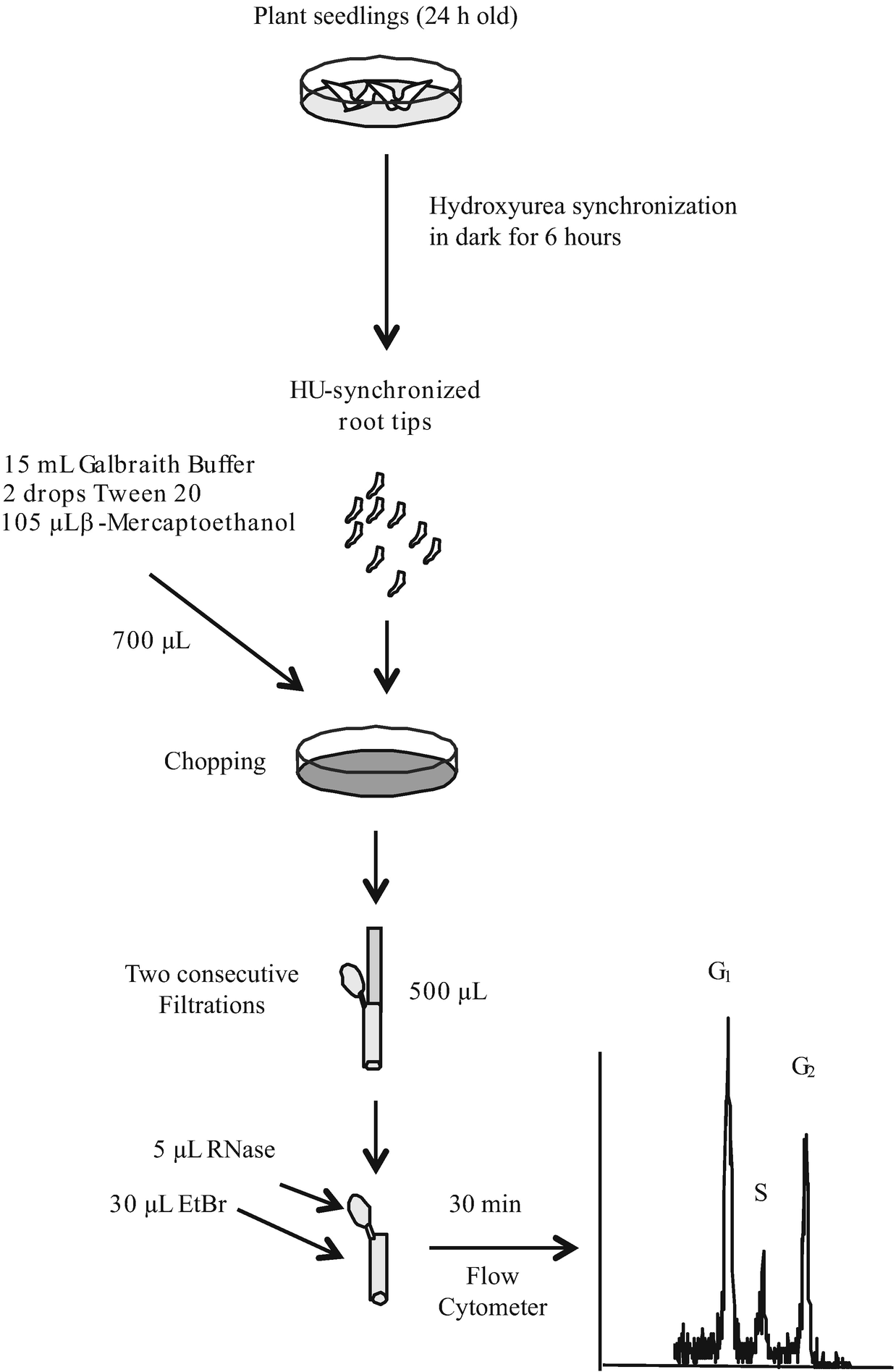
Flow Cytometry Cell Cycle Springerlink from media.springernature.com De alme ida engler, j. Interphase is composed of three subphases. The division in plant cells occurs by forming a cell plate structure in the middle of the cell. Cell cycle activation by plant parasitic nematodes a. The cell cycle is an ordered series of events involving cell growth and cell division that produces two new daughter cells. In eukaryotic cells, this process includes a series of four distinct phases. A cell cycle is made up of three main parts: The normal cell cycle consists of 2 major stages.
Interphase is composed of three subphases.
The division in plant cells occurs by forming a cell plate structure in the middle of the cell. In plant cells, a new cell wall must form between the daughter cells. These cells are termed as eukaryotes. For those cells with a nucleus, division occurs in the form of. Cell cycle control molecules were first discovered through cell fusion experiments in the 1970s. The fusion of cells in different stages of the cell cycle 1. During this segment of the cell cycle, a cell doubles its cytoplasm and synthesizes dna. A new cell wall must form between. A cell cycle is made up of three main parts: The cell cycle is divided into different phases (according to. The chapter on cell cycle and cell division in the class 11 syllabus explains that a cell cycle is a process of producing daughter cells. In the case of plants, with a. In eukaryotic cells, this process includes a series of four distinct phases.



Post a Comment