Plant Cells Contain Large Vacuoles Give Reason : Vacuole Definition Structure Function Facts Britannica / Plant cells have a large central vacuole, and this vacuole is used for storage, but it also plays a large role in plant shape and stability.
byDillon Blye-0
Plant Cells Contain Large Vacuoles Give Reason : Vacuole Definition Structure Function Facts Britannica / Plant cells have a large central vacuole, and this vacuole is used for storage, but it also plays a large role in plant shape and stability.. Which is why they are larger than other the role played by vacuoles in animal cells is not as important as in plant cells. Get free solutions to all questions from chapter transport in plants. Plant cells needs larger vacuole because vacuole helps plant cells needs larger vacuole because vacuole helps them to maintain turgor pressure within the cell. These are used for storage of food or water. Smooth endoplasmic reticulum or smooth er does not contain ribosomes and is involved with the production of lipids and aides in detoxification.
Plant cell is an eukaryotic cell primarily involved in photosynthesis and having its genomic content present synthesis of ribosomal rna takes place in the nucleolus. Smooth endoplasmic reticulum or smooth er does not contain ribosomes and is involved with the production of lipids and aides in detoxification. Which is why they are larger than other the role played by vacuoles in animal cells is not as important as in plant cells. Plants use vacuoles and vacuolar contents for programmed cell death (pcd) in two different ways: Almost all plant cells have large vacuoles that contain both hydrolytic enzymes and a variety of defense proteins.
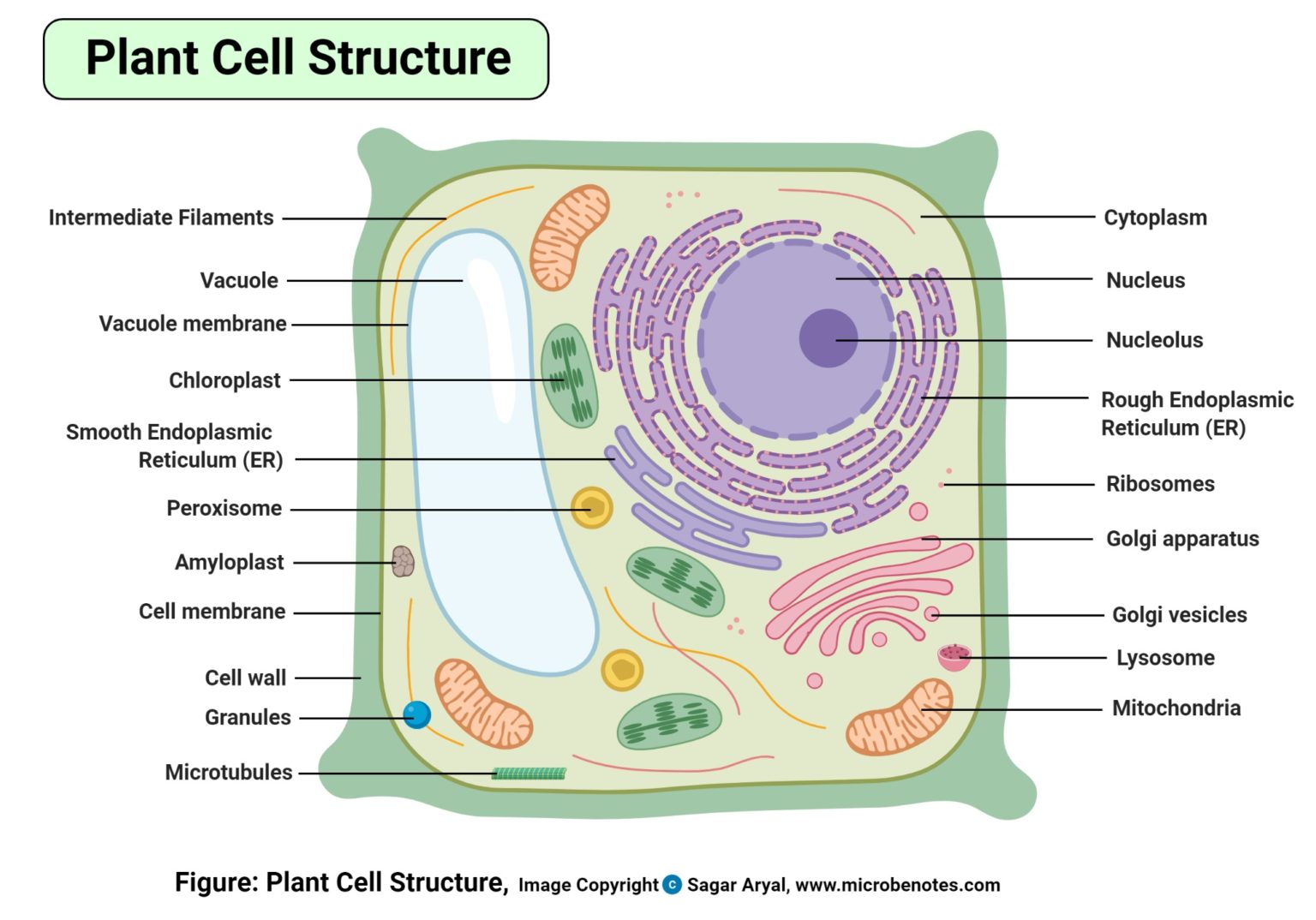
Plant Cell Definition Labeled Diagram Structure Parts Organelles from microbenotes.com Like animals, plants contain cells with organelles in which specific metabolic activities take place. Nucleus also contains chromatin fibres question: Only animal cells contain vacuoles. Most plant cells contain a large central vacuole, whereas those contained in animal cells take up a smaller portion of the cell. Plant cells have a large central vacuole, and this vacuole is used for storage, but it also plays a large role in plant shape and stability. Multiple vacuoles in plant cells. They occupy most of the portion of plant cells. Vacuoles and cells shrink and wilts the plant o gives the cell rigidity o if too much water is added, can suffocate the cells and kill the plant o some vacuoles • plants vs.
The cell wall is a rigid layer that is found outside the cell membrane and surrounds the cell, providing structural support and protection.
For instance, some vacuoles contain pigments that give certain flowers their characteristic colors. They occupy most of the portion of plant cells. The plant cell vacuole has multiple functions, including storage of proteins and maintenance of an acidic ph where proteases will have maximal activity. This vacuole is surrounded by the tonoplast, a type of cytoplasmic membrane that can a vacuole is used whenever a large amount of substance is taken in through endocytosis, or excreted through exocytosis. Vacuoles and cells shrink and wilts the plant o gives the cell rigidity o if too much water is added, can suffocate the cells and kill the plant o some vacuoles • plants vs. Plant cells needs larger vacuole because vacuole helps plant cells needs larger vacuole because vacuole helps them to maintain turgor pressure within the cell. At certain times and conditions the vacuole takes chloroplasts contain chlorophyll, the green pigment that gives leaves their colour and absorbs light energy. Lastly, plant cells contain large central vacuoles. A plant cell vacuole is surrounded by a single membrane called the tonoplast. Get free solutions to all questions from chapter transport in plants. In animal cells, other things are stored in the vacuoles including food and waste, therefore the main reason plant's vacuoles are so big is to keep the plant from bursting. Almost all plant cells have large vacuoles that contain both hydrolytic enzymes and a variety of defense proteins. In plant cells, large vacuoles are needed to store water.
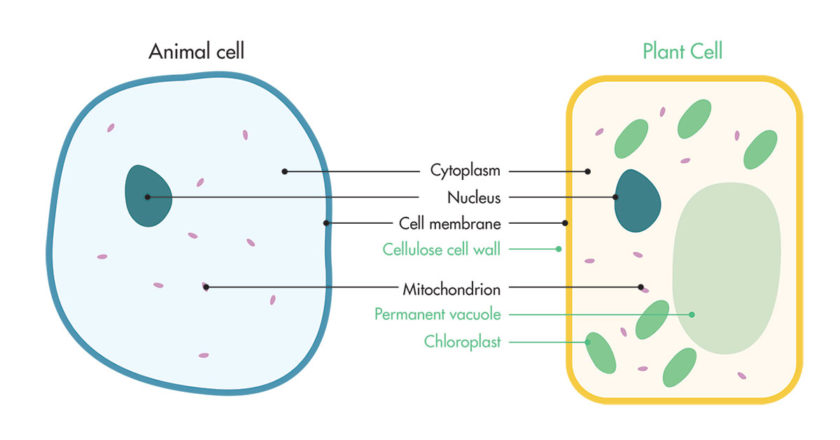
The large central vacuoles often found in plant cells enable them to attain a large size without accumulating the bulk that would make metabolism difficult. Structures that are not found in animal cells. At certain times and conditions the vacuole takes chloroplasts contain chlorophyll, the green pigment that gives leaves their colour and absorbs light energy. Plant cells have a cell wall, a large central vacuole, and plastids such as chloroplasts. Newly developing plant cells typically contain a number of smaller vacuoles.
De Novo Organelle Biogenesis In The Cyanobacterium Tdx16 Released From The Green Alga Haematococcus Pluvialis Biorxiv from www.biorxiv.org Their cells have essentially deflated. The water in the vacuole creates something plant cell needs to store extra food that is produced by photosynthesis so they need some area to store that. Vacuoles are like storage bubbles which are found mostly in plant cells. They play a very in plants, the vacuole contains an outer membrane called a tonoplast and a solution called cell sap. Multiple membrane vesicles come together to form vacuoles; Smooth endoplasmic reticulum or smooth er does not contain ribosomes and is involved with the production of lipids and aides in detoxification. Cell sap in vacuoles usually contains water and. Which is why they are larger than other the role played by vacuoles in animal cells is not as important as in plant cells.
In animal cells, other things are stored in the vacuoles including food and waste, therefore the main reason plant's vacuoles are so big is to keep the plant from bursting.
For this reason one speaks of lytic vacuoles. Without the enlarged vacuole, the. Cell sap in vacuoles usually contains water and. Animal cells o plants produce a cell wall o plants contain a large central vacuole o plants have many types of plastids that animal. Vacuoles are in some other eukaryotes but are much larger structures in plant cells. Vacuoles and cells shrink and wilts the plant o gives the cell rigidity o if too much water is added, can suffocate the cells and kill the plant o some vacuoles • plants vs. Unlike animals, however, plants use energy from sunlight to form in addition, plant cells have cell walls, plastids, and a large central vacuole: They occupy most of the portion of plant cells. Get free solutions to all questions from chapter transport in plants. Which is why they are larger than other the role played by vacuoles in animal cells is not as important as in plant cells. A plant cell vacuole is surrounded by a single membrane called the tonoplast. Young cells contain a larger number of smaller vacuoles but, taken as a whole, occupy only a vacuoles have an important function in recycling those cellular constituents that are defective or no longer required. Recent data call into question the generality of this theory.
The functions that vacuoles perform in different types of cells are. Plant cells have a large central vacuole, and this vacuole is used for storage, but it also plays a large role in plant shape and stability. The cell wall is a rigid layer that is found outside the cell membrane and surrounds the cell, providing structural support and protection. Without the enlarged vacuole, the. Nucleus also contains chromatin fibres question:
The Affect Of Roasting And Grinding On Cell Structure Beanscene from www.beanscenemag.com.au The central vacuole maintains turgor pressure against the cell wall. In animal cells, other things are stored in the vacuoles including food and waste, therefore the main reason plant's vacuoles are so big is to keep the plant from bursting. In plants, a large vacuole occupies the majority of the cell. In plant cells, large vacuoles are needed to store water. They play a very in plants, the vacuole contains an outer membrane called a tonoplast and a solution called cell sap. As cells develop large vacuoles, the two compartments merge; Multiple vacuoles in plant cells. Lastly, plant cells contain large central vacuoles.
Newly developing plant cells typically contain a number of smaller vacuoles.
Each plant cell has a large, single vacuole that stores biochemicals, helps in plant growth, and plays an important structural role for the plant. Multiple membrane vesicles come together to form vacuoles; Which is why they are larger than other the role played by vacuoles in animal cells is not as important as in plant cells. Plant cells have a cell wall, a large central vacuole, and plastids such as chloroplasts. Like animals, plants contain cells with organelles in which specific metabolic activities take place. Vacuoles are in some other eukaryotes but are much larger structures in plant cells. Their cells have essentially deflated. The water in the vacuole creates something plant cell needs to store extra food that is produced by photosynthesis so they need some area to store that. Newly developing plant cells typically contain a number of smaller vacuoles. A plant cell vacuole is surrounded by a single membrane called the tonoplast. Why do plant cells possess large sized vacuole? Vacuoles are essentially enclosed compartments which are filled with water containing inorganic and organic molecules including enzymes in solution. Animal cells o plants produce a cell wall o plants contain a large central vacuole o plants have many types of plastids that animal.


Post a Comment